A Period of Transformation
The modern history of Hungary is marked by profound transformations that have defined its place in Europe and the world. From the end of the Austro-Hungarian Empire to its integration into the European Union, the country has undergone significant social, political and economic changes.
The Collapse of the Austro-Hungarian Empire
The Austro-Hungarian Empire, one of Europe’s great powers in the 19th century, played a crucial role in shaping Hungary. However, its collapse in 1918 brought territorial losses and the beginning of a period of instability. To learn more about this era, visit the article Imperio Austrohúngaro.
The Treaty of Trianon
One of the most painful events in Hungary’s modern history was the signing of the Treaty of Trianon in 1920. This treaty stripped Hungary of two-thirds of its territory and population, leaving the country in a weakened position. The legacy of Trianon remains a contentious issue in Hungarian politics. The impact of Trianon and its consequences are discussed in multiple historical sources.
World War II
During World War II, Hungary initially aligned with the Axis powers. However, toward the end of the war the country was occupied by the Nazis in 1944 and then by the Soviets in 1945. This period left deep scars, with Budapest suffering severe damage. You can read more about monuments connected to this era in our article on Monuments históricos.
The 1956 Revolution
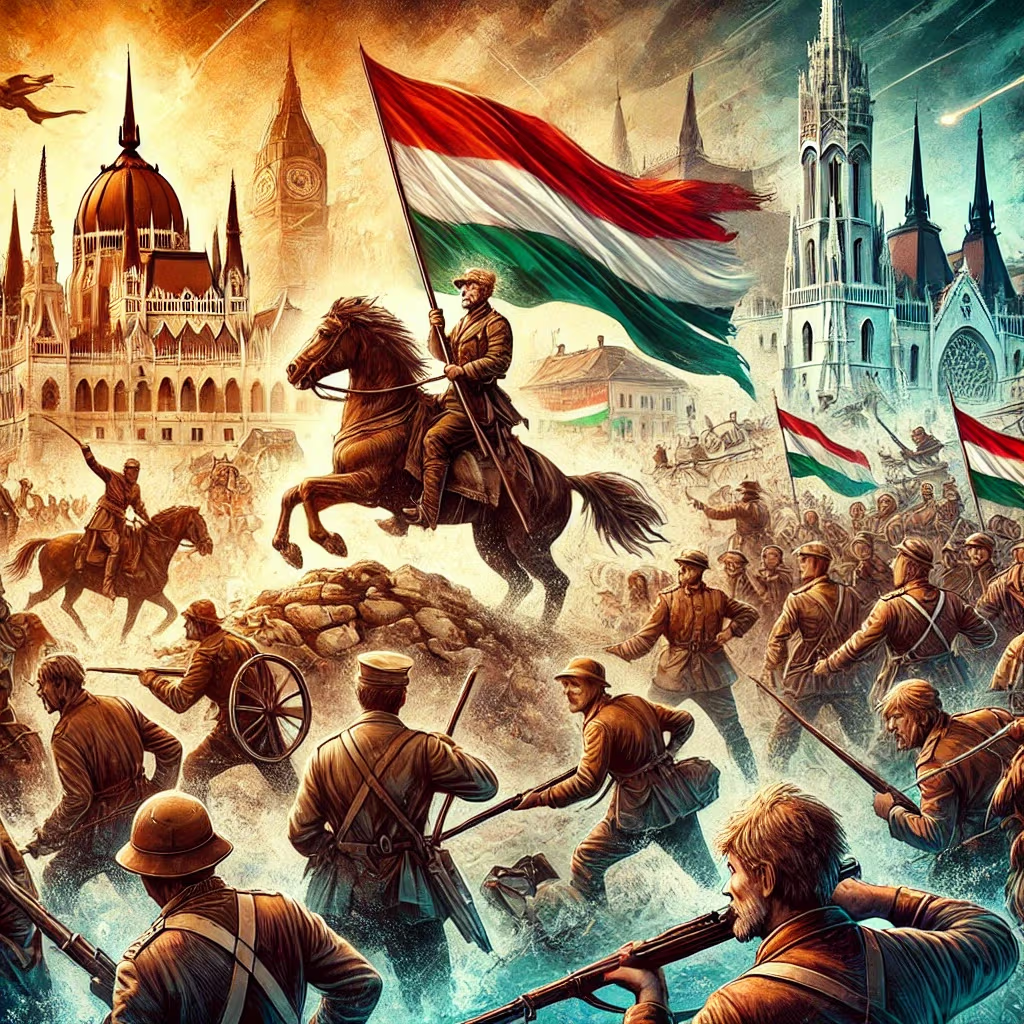
One of the most iconic moments of Hungary’s modern history is the 1956 Revolution. This uprising against Soviet domination was brutally suppressed, but it remains a symbol of the country’s struggle for freedom. If you want to explore this topic further, consult our article on Revolutions and Wars.
Hungary and the Fall of Communism
In 1989 Hungary played a key role in the fall of communism in Central Europe. This process culminated with the opening of the border with Austria, which helped precipitate the fall of the Berlin Wall. After the dissolution of the Soviet Union, Hungary began its transition to a parliamentary democracy.
Integration into the European Union
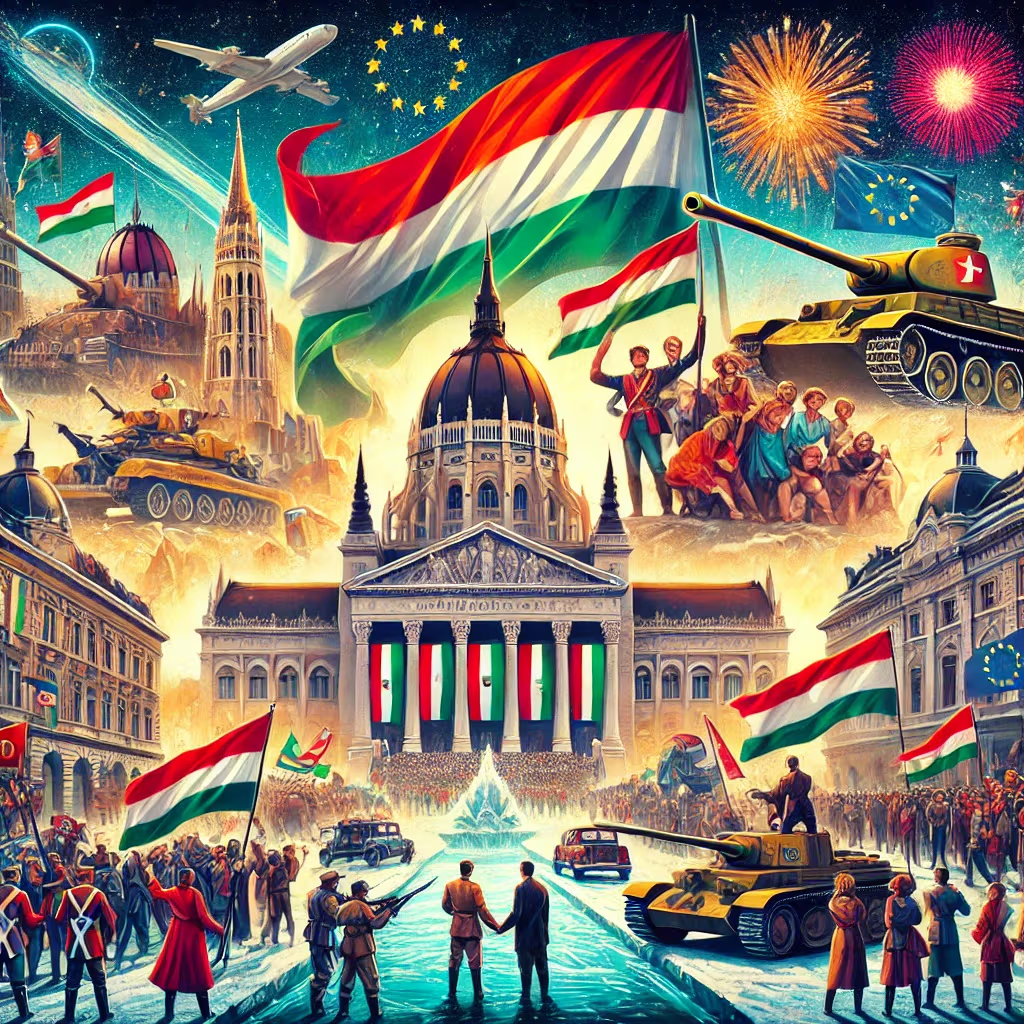
In 2004 Hungary joined the European Union, marking a new chapter in its history. EU membership brought new economic and social opportunities, consolidating the country’s position in Europe.
Final Reflection
Hungary’s modern history is one of perseverance and transformation. From the hardships of the Treaty of Trianon to its accession to the European Union, the country has overcome challenges and redefined its place in the world.