An era of splendor and change
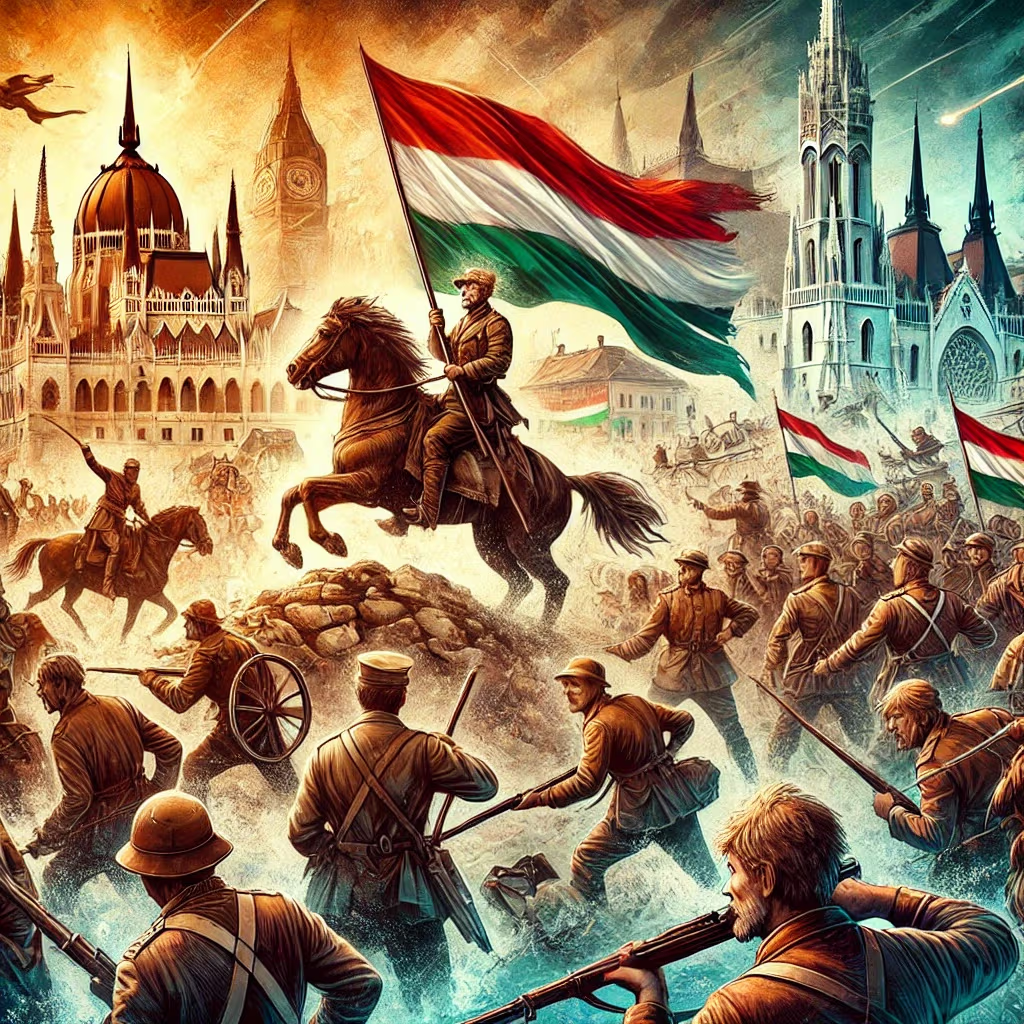
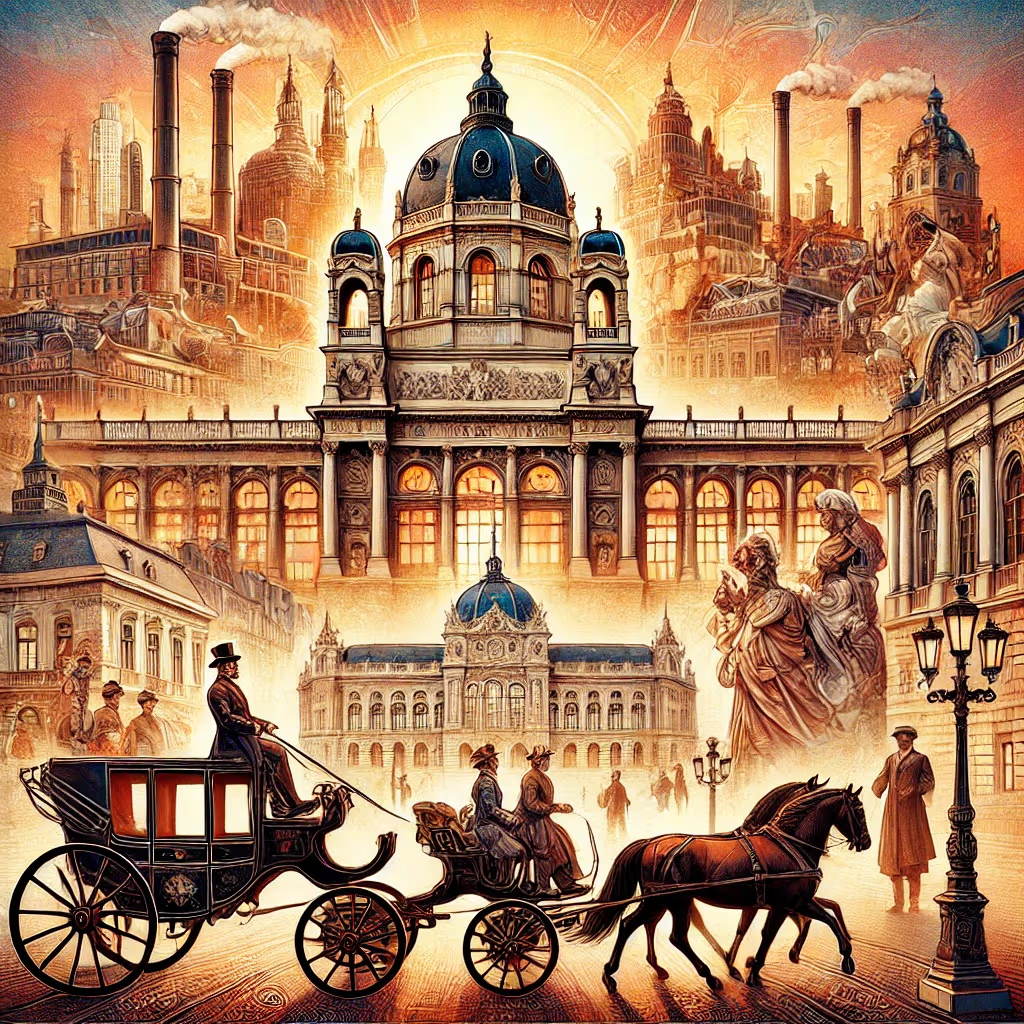
The Austro-Hungarian Empire was one of Europe's great powers from its creation in 1867 until its collapse at the end of World War I in 1918. This duality between Austria and Hungary left a deep mark on Budapest, which experienced unprecedented economic, cultural and architectural growth. Hungary's capital became the epicenter of development in the region, with monuments and buildings that reflect the grandeur of this era.
Budapest's rise under the Austro-Hungarian Empire
During this period, Budapest experienced exponential growth both economically and culturally. Iconic buildings such as the Hungarian Parliament, the St. Stephen's Basilica, and the Chain Bridge were built during the boom of the Austro-Hungarian Empire, highlighting the neo-Gothic and neo-Renaissance styles that defined much of the city's architecture.
Budapest's role in the Dual Monarchy
The 1867 agreement between Austria and Hungary established a dual government structure, in which Budapest became the capital of the Hungarian half of the empire. The city flourished thanks to its new status, and modern infrastructure such as the metro, one of the world's earliest underground systems, was constructed.
Monuments that evoke the Austro-Hungarian Empire
- Monument to the Victims of the German Occupation, in Liberty Square, which also symbolizes the struggle for independence during the 19th century.
- The Buda Castle, renovated during this period, reflects the monarchy's power and its strategic importance.
- Millennium Monument in Heroes' Square, a work that celebrates the thousand years since the Hungarian conquest of the Carpathian Basin.
Tips for visiting Austro-Hungarian historical sites
If you're interested in learning more about this fascinating era, we recommend taking a tour of some of Budapest's main architectural highlights. You can start at the Chain Bridge, which connects Buda and Pest, continue to the Hungarian Parliament and finish at the Buda Castle, where you can enjoy the best views of the city and understand how this empire shaped its history.
To learn more in depth about the Austro-Hungarian Empire and how it influenced the city, we suggest booking our Free Tour of Budapest, where we will take you to the most emblematic places.