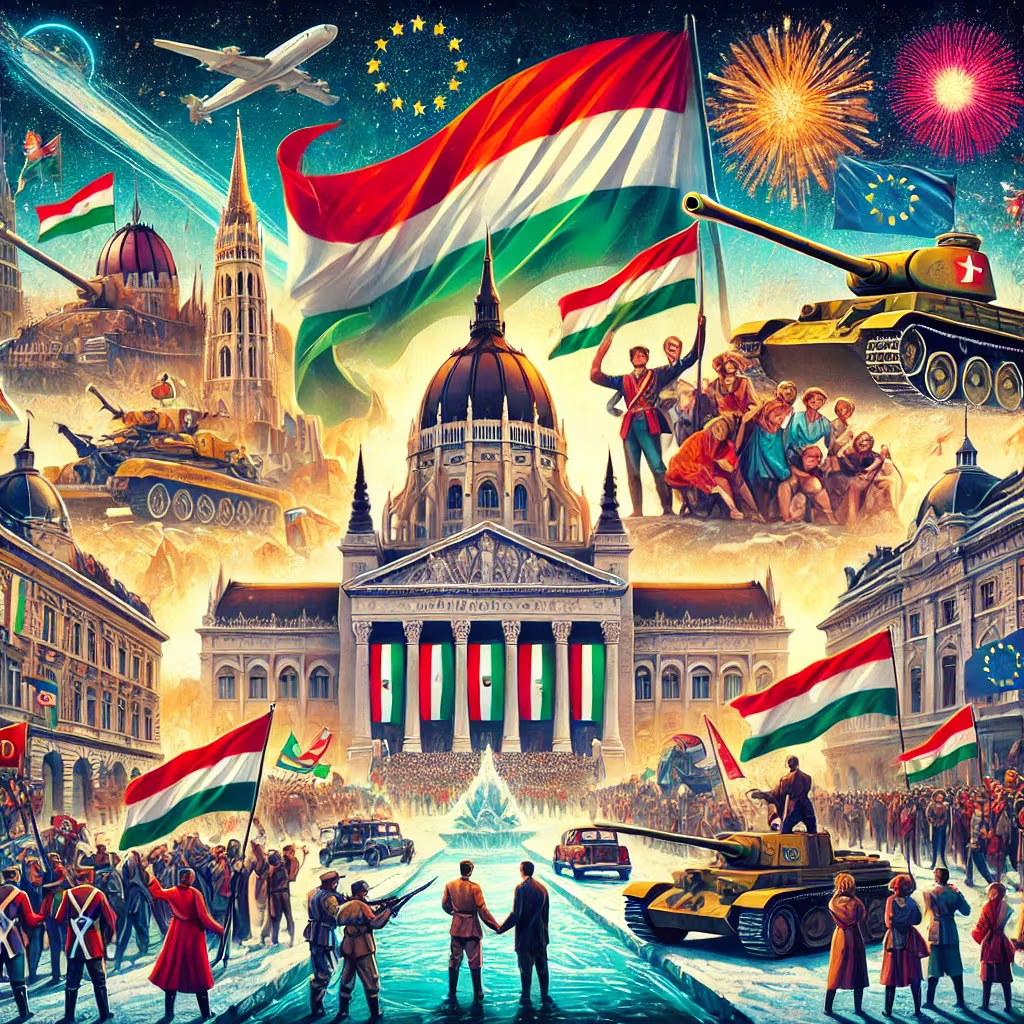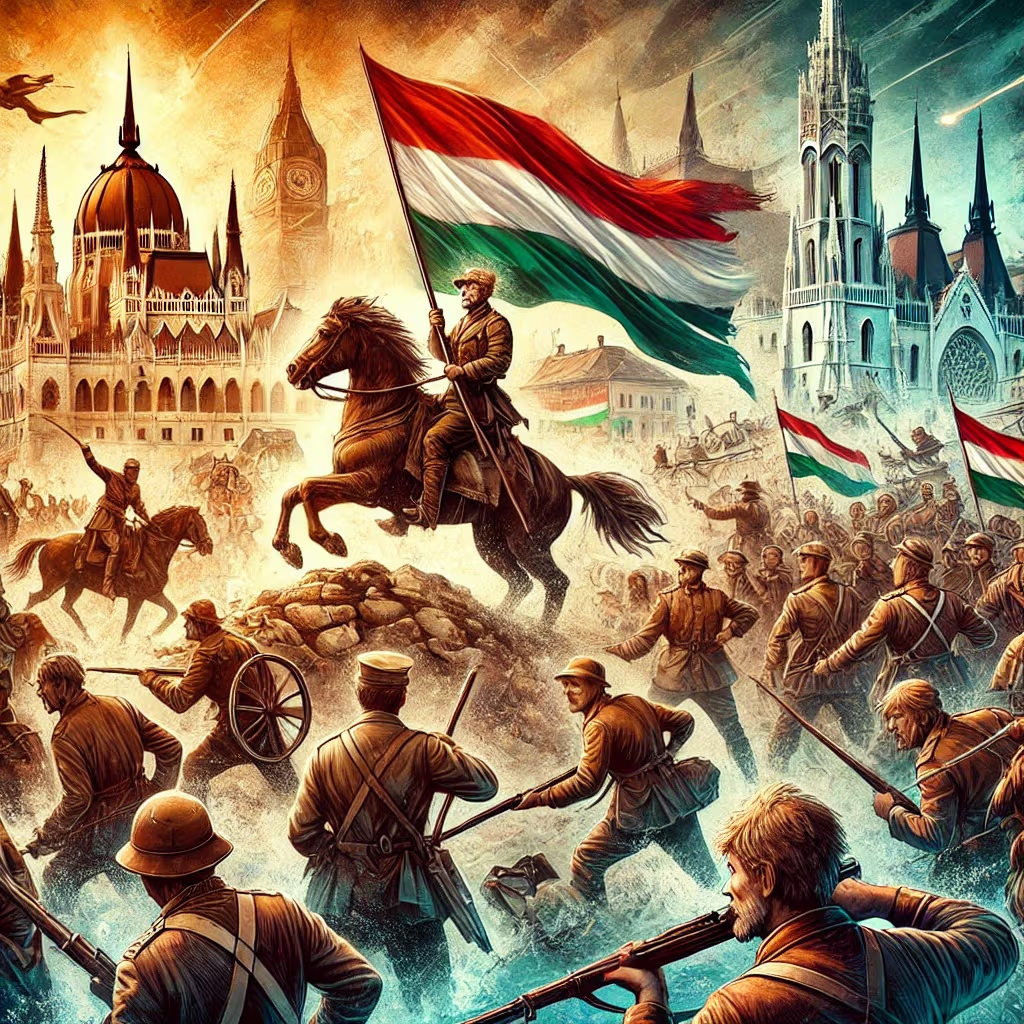
Hungary, throughout its history, has been the stage for major revolutions and wars that have shaped its national identity. From internal uprisings to world wars, the country has been at the centre of historical moments that changed not only its fate but also that of Europe.
The Revolution of 1848
One of the most significant events in Hungary’s history was the Revolution of 1848. Part of a wider movement across Europe, this revolution sought to free the country from the Austrian Empire and secure more rights for its citizens. Hungarians, led by Lajos Kossuth, fought bravely for independence and a more representative government. Although ultimately defeated, the revolution laid the groundwork for later reforms and was crucial in consolidating nationalist sentiment.
The Austro‑Hungarian Compromise of 1867
Although the 1848 Revolution did not achieve its immediate aims, its legacy was key to the Austro‑Hungarian Compromise of 1867. This agreement created the dual monarchy of Austria and Hungary, allowing both countries to share a monarch while retaining separate governments. The compromise ushered in a period of relative prosperity for Hungary, even as internal tensions remained.
World War I and its consequences
The outbreak of World War I had a profound impact on Hungary, which, as part of the Austro‑Hungarian Empire, sided with the Central Powers. At the end of the war in 1918, the empire collapsed, leading to Hungary’s independence. However, the war’s aftermath was devastating. With the signing of the Treaty of Trianon in 1920, Hungary lost more than two‑thirds of its territory, leaving a deep wound in Hungarian society.
The Hungarian Revolution of 1956
During the Cold War, Hungary experienced one of its most remembered uprisings: the Hungarian Revolution of 1956. In this revolt, the Hungarian people rose against the communist regime and Soviet influence. Although initially successful, the Soviet military intervention crushed Hungarians’ hopes of breaking free from the Eastern bloc. Despite its failure, the revolution remains a symbol of the struggle for freedom and independence.
Legacy of revolutions and wars in Hungary
Each of these revolutions and wars has left an indelible mark on Hungarian culture and identity. Today, historic sites in Budapest commemorate these events. Some of the most notable include:
- Gellért Hill, an important symbol of resistance.
- The Hungarian Parliament, where many key decisions took place.
- Buda Castle, witness to numerous wars and conflicts.
The revolutions and wars in Hungary, though painful, helped forge a strong national spirit and a deep love of independence. Their history lives on in monuments, streets and squares across Budapest, inviting visitors to reflect on the past and learn from the sacrifices of those who fought for freedom.
Learn more about Hungary’s history and legacy in our article on Ancient History and discover how these events shaped the nation Hungary is today.