A fascinating journey
Hungary is a country with a rich and diverse history, full of key moments that have shaped the culture and identity of its people. From ancient times to the modern era, Hungary’s history offers countless interesting events, with influences from the Roman Empire, the Mongol invasions, the Habsburg period and the years under Soviet control.
The origins of the Hungarian kingdom
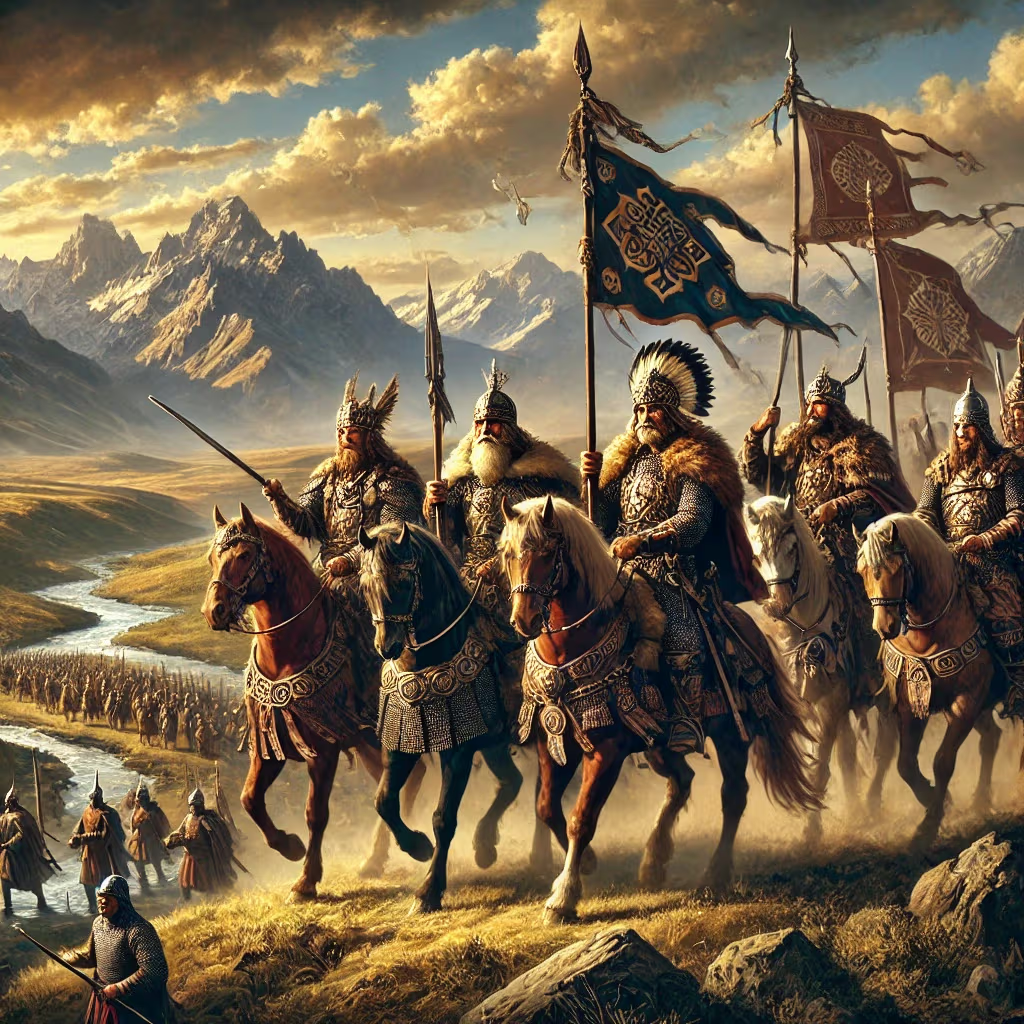
The history of Hungary begins in 895, when the Magyar tribes settled in the Carpathian Basin. Under the leadership of Árpád, they formed the core of what would become the future Kingdom of Hungary. In the year 1000, Prince Stephen I was crowned as the first Christian king of Hungary, marking the start of a new era. The Basilica of St. Stephen in Budapest is an important symbol of this period of conversion to Christianity.
Invasions and reconstruction
Throughout its history, Hungary was invaded by various foreign forces. One of the most devastating was the Mongol invasion in the 13th century, which destroyed large parts of the kingdom. However, under the leadership of later Hungarian kings, the country was rebuilt, and the Buda Castle stronghold was reinforced to defend the realm.
For those interested in military history and architecture, a visit to Buda Castle is a must. You can learn more about the castle in our dedicated article: Castillo de Buda.
The Habsburg period and the Austro-Hungarian Empire
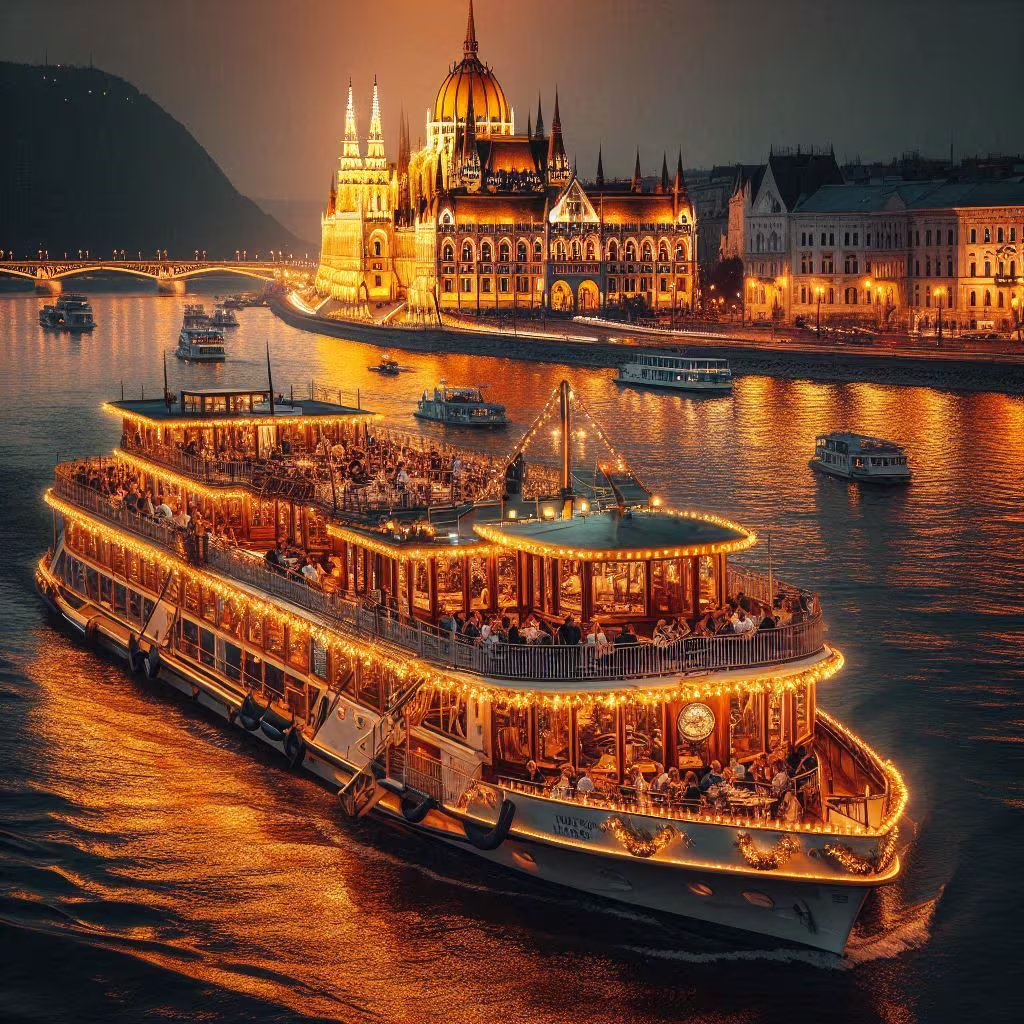
In 1526, Hungary was divided into three parts after the defeat at the Battle of Mohács, with a large portion of the country occupied by the Ottomans. However, during the 17th century the Habsburgs regained control of the country. In 1867, the Austro-Hungarian Compromise created the Austro-Hungarian Empire, uniting Austria and Hungary under a dual monarchy. This was a period of great prosperity, leaving a significant architectural and cultural legacy visible in many of Budapest’s monuments, such as the Hungarian Parliament.
The modern era and the 20th century
After World War I, the Austro-Hungarian Empire collapsed, and Hungary suffered major territorial losses with the Treaty of Trianon in 1920. During World War II, Hungary fought on the side of the Axis powers, which led to German occupation and, later, the entry of Soviet forces. The country remained under communist control until 1989, when the regime fell and democracy was restored.
The Monument to the Victims of the German Occupation, located in Liberty Square, commemorates this painful period of Hungarian history. It is a monument full of symbolism and controversy that you should not miss. Learn more about historic monuments in Budapest in our article: Monumentos históricos.
Hungary today
Hungary evolved throughout the 20th century and became a member of the European Union in 2004. Today it is a modern country that preserves its rich history and traditions, with Budapest as its capital and one of the most vibrant and visited cities in Europe. If you are planning your trip to Budapest, don’t miss our Free Tour of Budapest, where we explore the city’s history and culture in depth: Free Tour de Budapest.