A Tribute to the Past
The Monument to the Victims of the German Occupation, located on Liberty Square (Szabadság tér) in Budapest, is one of Hungary’s most controversial memorials. Opened in 2014, the monument was intended to honor victims of the Nazi occupation during World War II. However, its symbolism and the historical interpretation it presents have sparked intense debate across the country. In this article, we explore its historical context, the sculpture’s symbolism, and how the monument has become a site for reflection and remembrance in Budapest.
History of the Monument and Its Controversy
The monument was commissioned by the Hungarian government to commemorate all victims of the German occupation in March 1944. The sculpture depicts an angel, symbolizing Hungary, being attacked by an eagle, symbolizing Nazi Germany. However, the depiction has generated controversy because of its historical interpretation. Some critics argue the monument absolves Hungary of its role in the Holocaust, omitting the part played in the persecution of the Jewish community and the deportation of thousands of Hungarian Jews to concentration camps.
The monument has been the focus of numerous protests and demonstrations since its installation. It has also become a place where activists and citizens leave personal items and historical documents, creating a “living memorial” that reflects the pain and remembrance of victims in a more direct and personal way.
How to Reach the Monument on Liberty Square
The Monument to the Victims of the German Occupation is located on Szabadság tér (Liberty Square) in central Budapest, one of the city’s busiest and most accessible areas for visitors. Nearby are other historical sites such as the Hungarian Parliament, one of the city’s most iconic buildings, and the Chain Bridge, from which you can enjoy spectacular views of the Danube and Buda Castle.
Reflection and Remembrance in Budapest
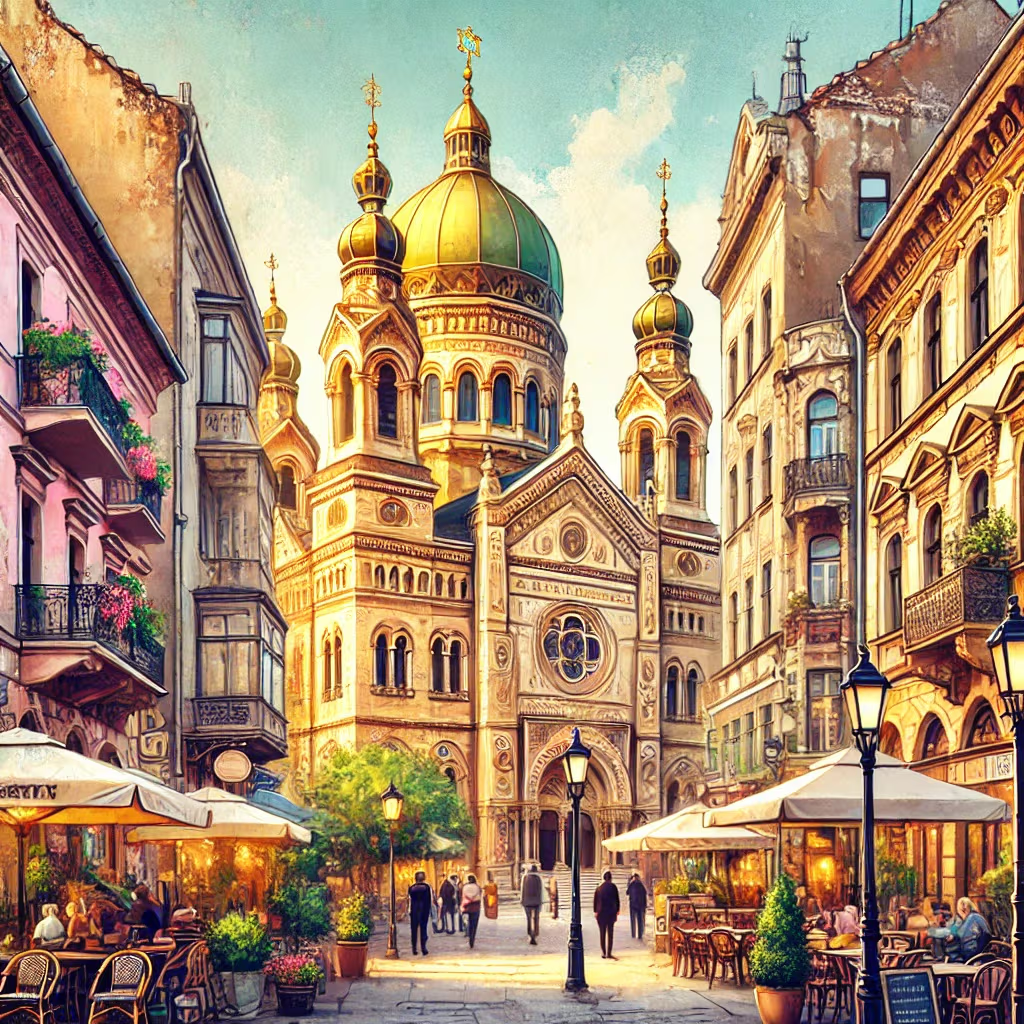
For those who wish to delve deeper into Budapest’s Jewish history, it is recommended to visit the Great Synagogue of Budapest, the largest in Europe, and the Tree of Life, a moving memorial dedicated to Hungarian Jewish victims of the Holocaust. These sites reflect the historical and cultural richness of Budapest, as well as the deep wound World War II left on Hungarian society.
Other Cultural Experiences in Budapest
Beyond historical monuments, Budapest offers a wide range of cultural activities. From exploring the Castle District to enjoying the city’s nightlife in its famous ruin pubs, the city is a destination full of contrasts and unique traditions. For relaxation, don’t miss the Széchenyi Baths or the Gellért Baths, where you can enjoy thermal waters while admiring century-old architecture.
The Monument’s Impact on Hungarian Society
Despite the controversies, the Monument to the Victims of the German Occupation has prompted deep reflection about Hungary’s past and historical responsibility. For many, it represents the need to confront history honestly, while for others it is a reminder of the complexities of collective memory. Visiting this site allows tourists to feel firsthand the emotions it evokes in Hungarians and the ongoing struggle to preserve historical memory.
If you want to learn more about the crucial moments in Hungary’s history and its heritage, Budapest is a city that captivates and educates through its monuments, museums, and memory-laden streets. Explore this European capital and discover the resilience and cultural richness of a people who continue to honor their history while building a hopeful future.