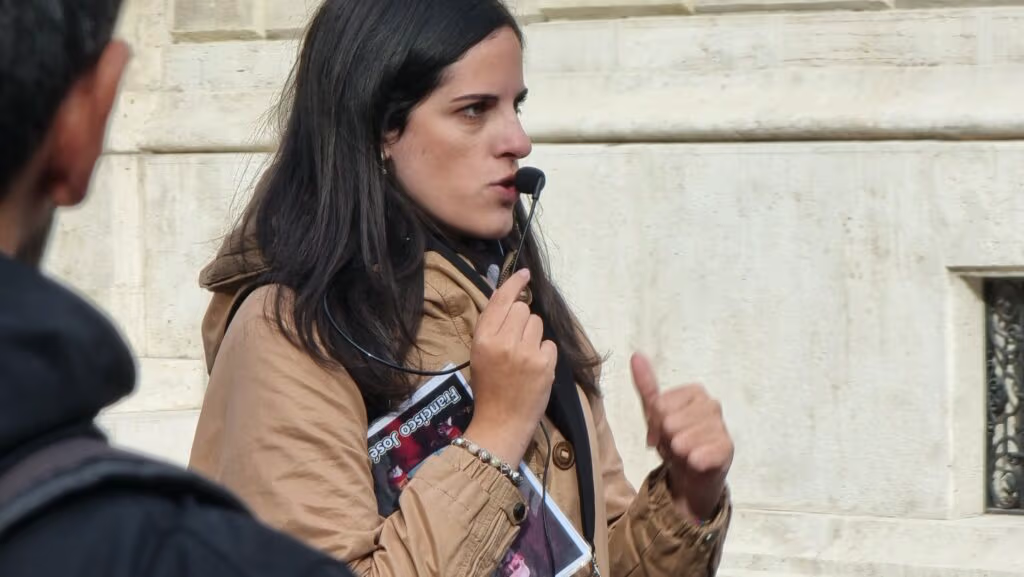
EL PASO BUDAPEST © Official guide — Giulia
The birth of the Free Tour: a revolution in tourism
In 2003, Chris Sandeman was an unemployed tour guide in Berlin. Aware of how difficult it was to find clients and of the fierce competition in the sector, he came up with an idea that was both simple and revolutionary: he took a sign, stood in the street and presented a direct message — a tour based on tips.
At first, the proposal generated scepticism. A tour without a fixed price sounded unusual, and passers-by did not always understand how the concept worked. Chris persisted because he believed there was an underserved group of travellers: people on limited budgets who could not or did not want to pay the price of conventional tours.
He then tried a different strategy: offering the tours directly in hostels. There he found an ideal audience of backpackers, young travellers and visitors looking for an authentic experience without putting too much pressure on their budget. According to the original article, this is how the first Free Tour model took shape and began to change the way city tours were offered.
The success of the model: from Berlin to the world
What began as a practical idea in Berlin soon became an international phenomenon. Free tours made guided culture and history more accessible and introduced a different commercial dynamic: guides no longer depended exclusively on a fixed ticket price, but on their ability to engage, inform and entertain the people walking with them.
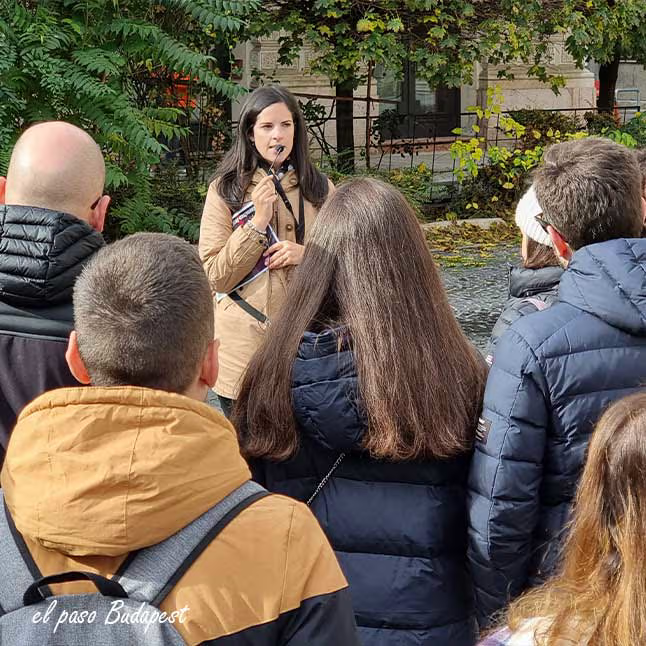
Many of the guides were young, enthusiastic and charismatic, with a fresh style. Each tour was almost a live performance in which the quality of the storytelling and the connection with the group directly influenced the reward at the end. Travellers, in turn, often felt that the tip-based format encouraged guides to make a strong effort to deliver a memorable experience. Over time, free tours became a standard activity for travellers of many ages.
Conflict with traditional tourism
As the free-tour model expanded, it also generated resistance from parts of the traditional tourism industry. Travel agencies and conventional guides sometimes saw it as a threat, and some argued that tours without a fixed price devalued professional guiding work.
Protests and calls for regulation appeared in several cities. Some guide associations argued that the absence of fixed prices could contribute to precarious working conditions. At the same time, the model continued to grow, reflecting broader changes in the way independent travellers searched for and booked experiences.
Some traditional guides eventually adapted to the new model. They discovered that they could continue working independently and that their income was closely linked to how satisfied travellers were with the experience.
A model that stayed
Today, free tours are part of the tourism landscape in many large cities around the world. What the original article describes as a simple sign in Berlin became a global industry and permanently changed the way many visitors begin exploring a destination.
In that account, Chris Sandeman not only found a solution to unemployment but also helped create a movement that transformed urban tourism.
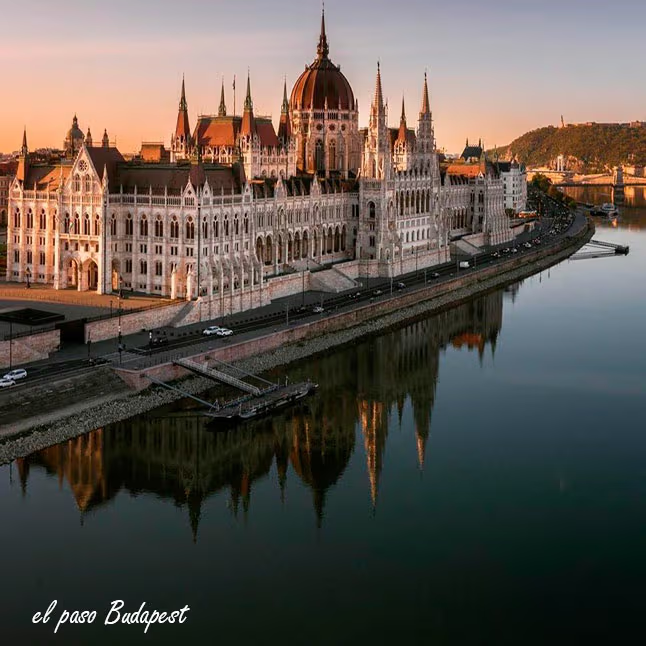
Free Tour Budapest
The original article states that Budapest received its first locally guided free tours during the first decade of the 2000s.
The format became very popular in Budapest, with travellers joining walking tours every day in many different languages.
You can see the tours currently offered on our Budapest Free Tour page.